Vice Dean of Our Faculty, Assoc. Prof. Dr. Mehmet Soytürk, Evaluated EU Development Policies at TİKA
Associate Dean of Our Faculty, Assoc. Prof. Dr. Mehmet Soytürk, Evaluated EU Development Policies at TİKA
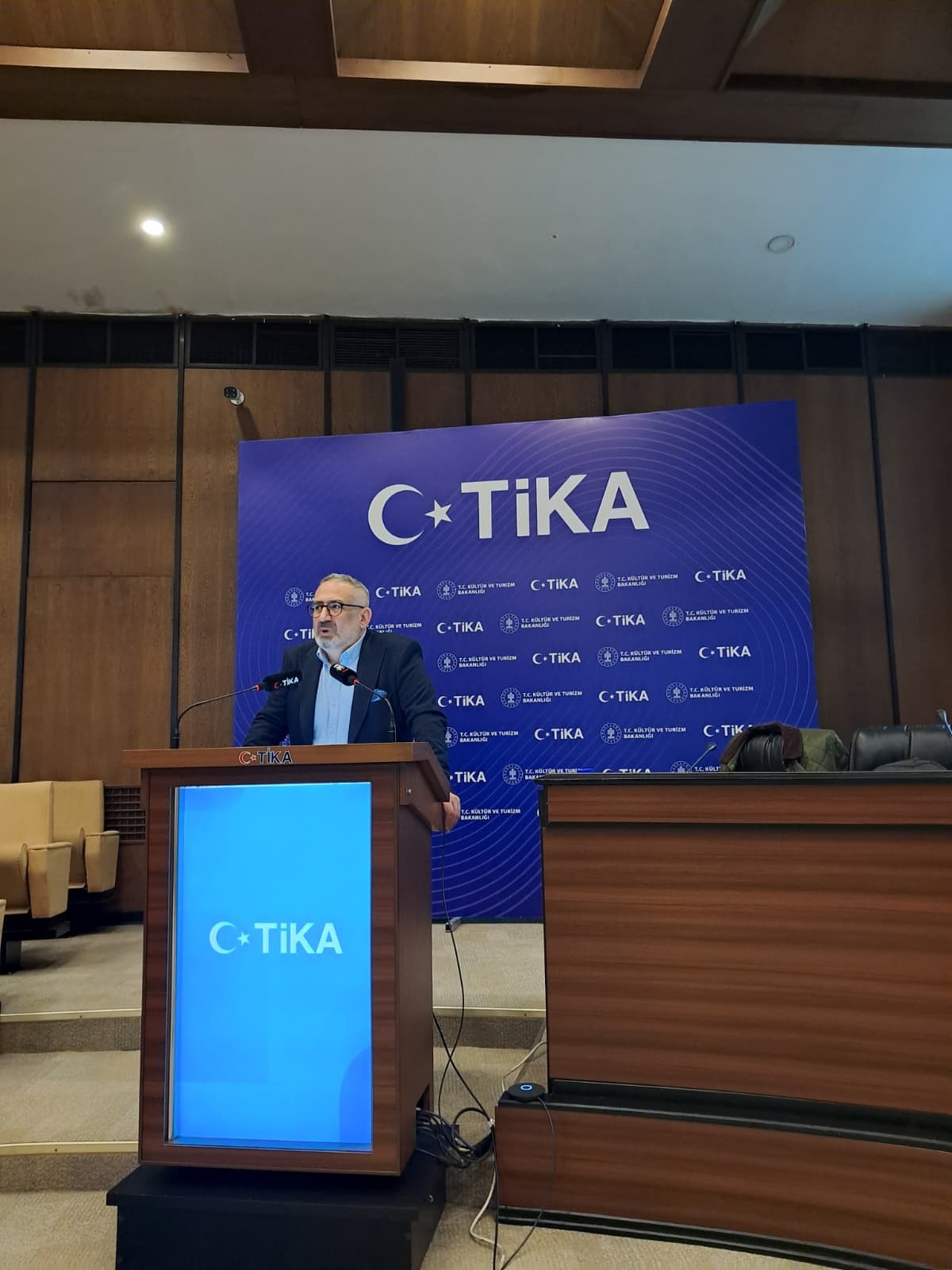
Assoc. Prof. Dr. Mehmet Soytürk, Vice Dean of the Faculty of Economics and Administrative Sciences at Turkish–German University and a faculty member of the Department of Political Science and International Relations, participated as a speaker in the panel titled “Development,” organized on 31 March 2026 in cooperation with Turkish Cooperation and Coordination Agency (TİKA) and the Foundation for Turkish Studies (TAV).
The panel was held both at TİKA’s headquarters in Ankara and online, reaching a wide audience, including representatives of the institution from various countries.
From Aid to Strategic Instrument: The Transformation of EU Development Assistance
In his presentation titled “The Transformation of EU Development Assistance in the Political Economy Pendulum,” Assoc. Prof. Dr. Soytürk examined the European Union’s development policies from a historical perspective. He emphasized that EU external assistance has evolved beyond a purely humanitarian mechanism into a significant foreign policy instrument that adapts to structural changes in the international system.
The key stages highlighted in the presentation can be summarized as follows:
- Post-Colonial Legacy: Relations during the Lomé Convention period
- Partnership and Conditionality: Integration of democratic standards and principles of good governance into aid policies
- Geopolitical Transformation: The increasing entanglement of development policies with strategic competition and security policies through initiatives such as Global Gateway
Balancing Normative Power and Rational Strategy
Evaluating EU development assistance within an academic framework, Assoc. Prof. Dr. Soytürk drew attention to the balance between the “normative power” approach and “strategic interests” discussed in the literature. He analyzed, based on empirical evidence, that contemporary development policies are directly linked not only to socio-economic support but also to geostrategic objectives such as managing irregular migration and ensuring regional stability. In this context, development assistance was highlighted as a functional tool in strengthening the EU’s regional security as a global actor.
Academic and Institutional Cooperation
The panel, which brought together TİKA representatives, academics, and policymakers, attracted significant interest, particularly in response to Assoc. Prof. Dr. Soytürk’s comprehensive theoretical and empirical framework. The event, at which our faculty was represented at the level of associate dean, contributed to strengthening academic cooperation and knowledge exchange between our university and public institutions.